The global demand for farmed marine fish and shrimp continues to rise. This creates several challenges for the aquaculture industry, particularly the decreasing supply of aquafeed ingredients that provide long-chain polyunsaturated fatty acids (LC-PUFA), such as omega-3 (n-3 LC-PUFA).
Ingredients rich in these fatty acids are essential for fish growth and health, and aquafeeds must supply the right balance of n-3 LC-PUFA to ensure they are present in the fish we consume. Given the decreasing supply of traditional sources like fish meal and fish oil, the Food and Agriculture Organization calls nutrient diversification in aquafeeds
Can amphipods convert plant foods into omega-3?
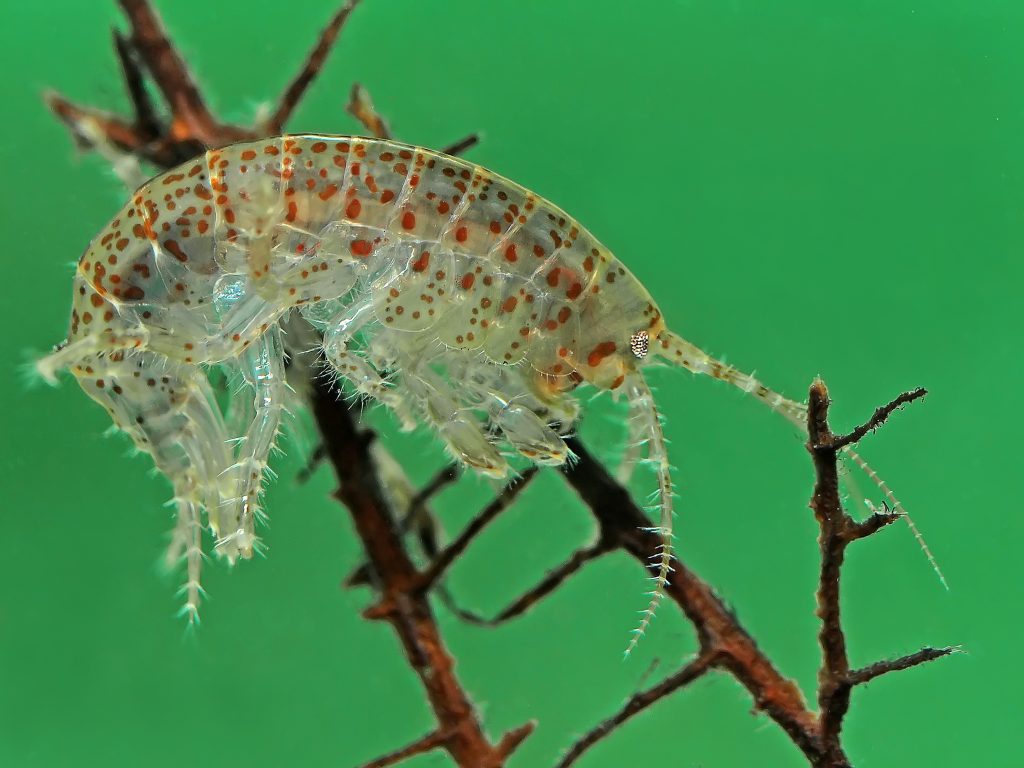
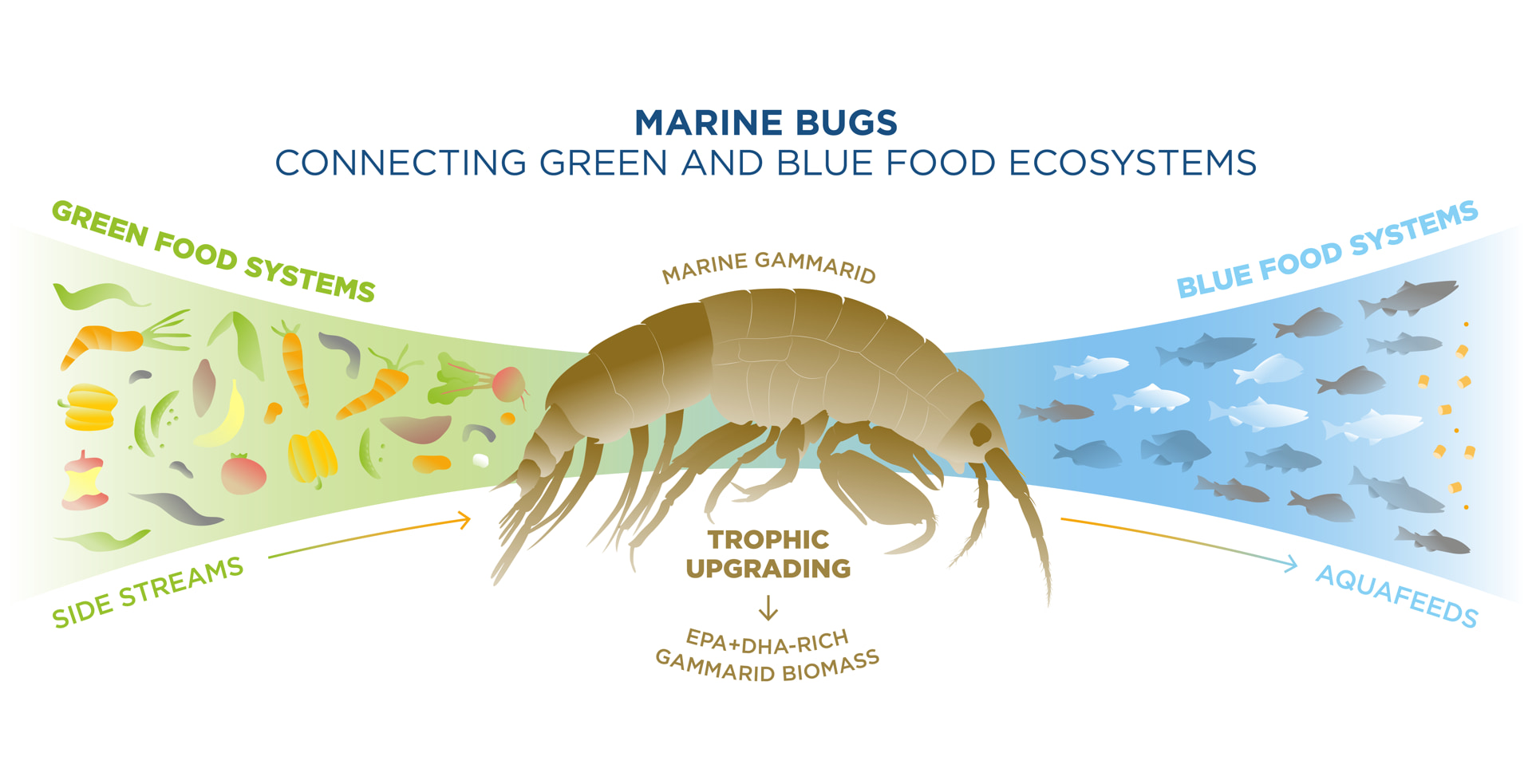
The PUFApods project is exploring a new source of n-3 LC-PUFA – gammarid amphipods. Previous preliminary studies have shown that these small shrimp-like crustaceans can convert their plant-based diets into biomass enriched in n-3 LC-PUFA.
Based on this process, known as trophic upgrading, the PUFApods project aims to produce a new ingredient for marine aquafeeds that can deliver n-3 LC-PUFA: biomass of gammarid amphipods cultured using plant food from side streams.
In this project, we are testing the hypothesis that estuarine gammarid amphipods have evolved biological mechanisms to upgrade short-chain saturated fatty acids (SC-SFA) – common in terrestrial plants – into n-3 LC-PUFA.
Gammarid amphipods inhabiting estuarine habitats face high osmotic stress and consume plant-based diets. As a result, they may have evolved a greater ability to convert SC-SFA into n-3 LC-PUFA, given how these biomolecules are essential for osmoregulation but are not naturally present in terrestrial plants.
Designing a new aquafeed ingredient
As part of the PUFApods project, we will design and test a prototype modular bioreactor for producing gammarid amphipods using plant food processing side streams. In parallel, we will assess the economic feasibility of using amphipods as a new ingredient in marine aquafeeds.
PUFApods is a three-year project that began in January of 2023 and is scheduled to conclude in December of 2025.
PUFApods is committed to open science and FAIR data principles, being framed within high ethical, gender and equity standards.